If it feels like South Florida has been stuck under rain clouds lately, you’re not imagining it.
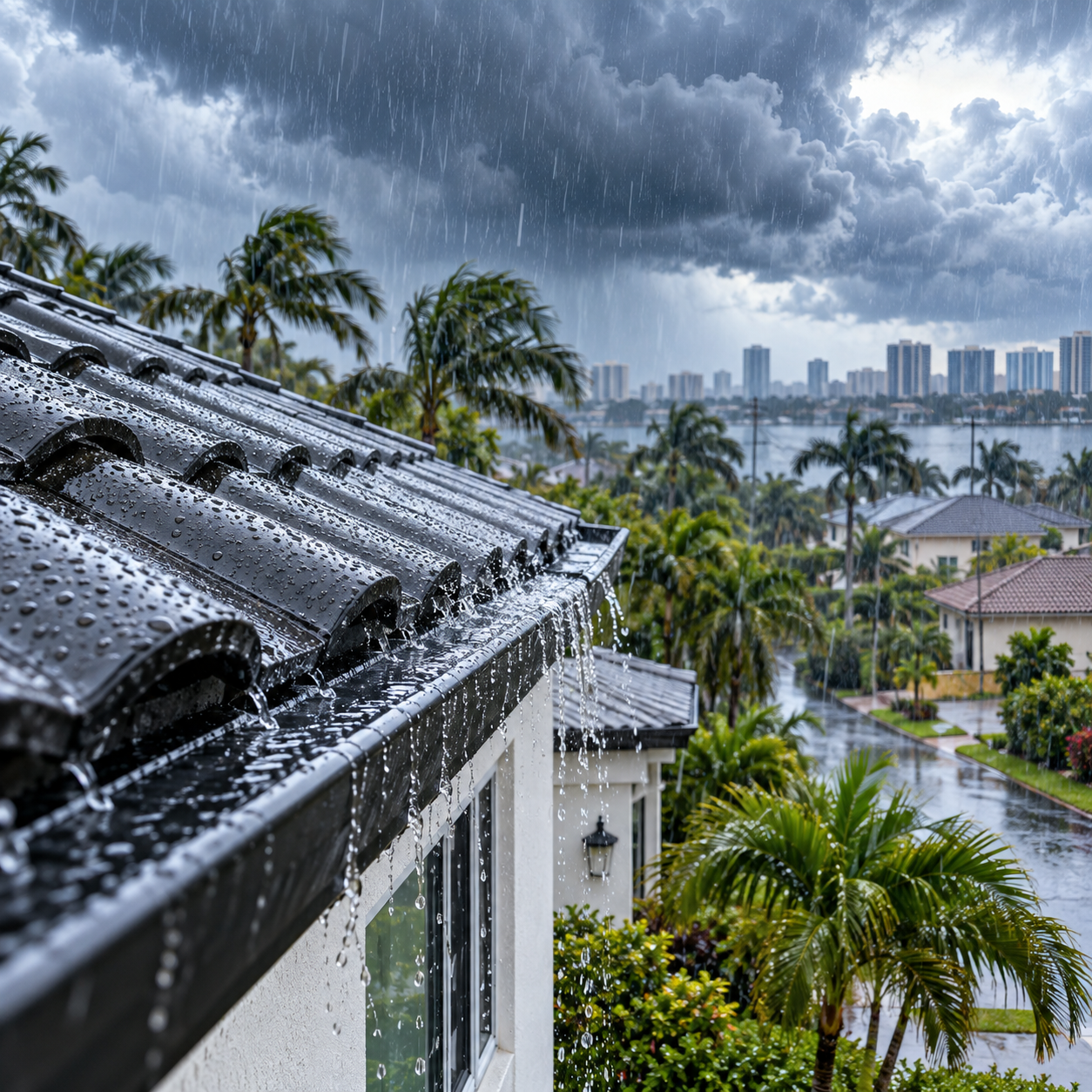
Another stretch of wet weather is affecting the region this week, with scattered to numerous showers and thunderstorms expected across South Florida. The National Weather Service is also warning that heavy downpours and repeated rounds of rain could produce localized flooding, particularly across the east coast metro areas.
For homeowners, property managers, and building owners, periods of persistent rain can also reveal something important: how well your roof is actually performing.
A roof may appear perfectly fine during dry weather. It’s when the rain keeps coming that small vulnerabilities can finally make themselves known.
Why Repeated Rain Can Be Hard on a Roof
One afternoon thunderstorm isn’t necessarily the biggest test for a roofing system. Problems can become more noticeable when roofs are exposed to repeated rainfall with limited time to dry between storms.
This is particularly important in South Florida, where roofing systems already endure intense UV exposure, heat, humidity, wind, and heavy seasonal rainfall.
A small opening around flashing, a deteriorated seal, a cracked tile, a vulnerable roof penetration, or an aging section of roofing material may allow moisture to enter.
And the source isn’t always where you see the water.
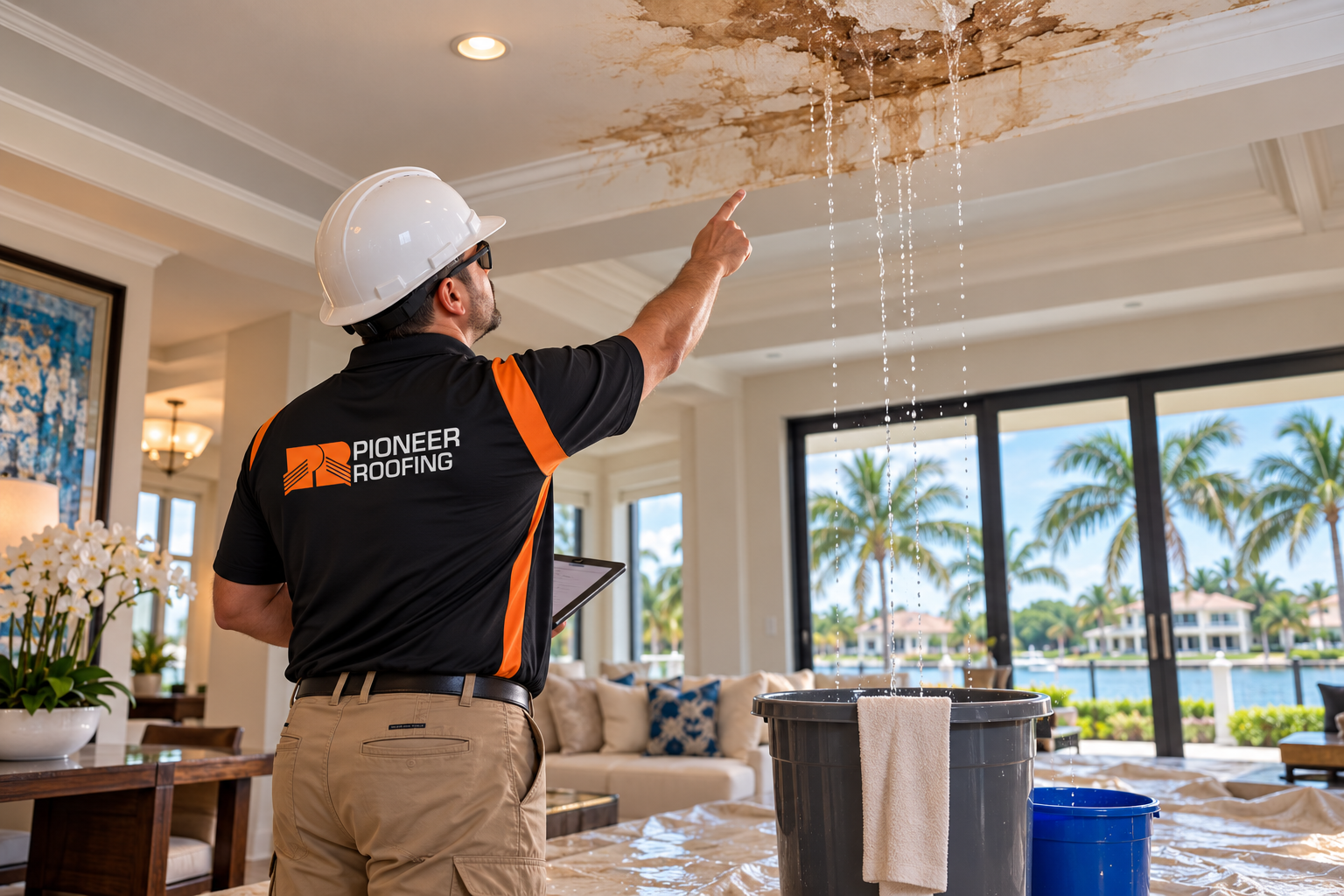
Water can travel underneath roofing materials or through parts of a building before eventually appearing as a ceiling stain, damp area, bubbling paint, or other visible sign of moisture.
Your Roof Is Being Put to the Test Right Now
Heavy rain can essentially act as a real-world test of your roofing system.
This week is a good example. South Florida is experiencing another active stretch of showers and thunderstorms, and recent storms have already resulted in flood advisories in portions of the region. On October 6, for example, the National Weather Service reported that between two and three inches of rain had fallen in an area of northeastern Palm Beach County during heavy thunderstorms.
When that much water falls in a short period—or when storms repeatedly move across the same area—proper roof drainage becomes especially important.
On flat and low-slope roofs, drains, scuppers, gutters, and other drainage components need to move water away from the roofing system efficiently. Debris or drainage problems can contribute to areas of standing water and place additional stress on the roof.
Signs to Watch for During This Week’s Rain
You don’t need to climb onto your roof to look for trouble. In fact, property owners should leave rooftop inspections to trained roofing professionals, particularly during or immediately after wet weather.
Instead, pay attention to what’s happening inside your home or building.
Look for new ceiling stains, discoloration, bubbling or peeling paint, damp drywall, musty odors, dripping water, or moisture around windows and exterior walls.
Commercial property managers should also pay attention to ceiling tiles, mechanical areas, interior walls, and spaces beneath known roof penetrations.
If something wasn’t there before this stretch of rain, don’t ignore it.
Don’t Assume a Small Ceiling Stain Means a Small Problem
One of the most important things to understand about roof leaks is that the visible symptom doesn’t necessarily tell you the size—or location—of the roofing problem.
A stain on the ceiling may appear several feet away from the actual point where water entered the roofing system.
That’s why simply addressing the interior stain isn’t enough. The source of the moisture needs to be identified.
Professional leak detection allows a roofer to evaluate potential entry points and determine what type of repair may be necessary.
What About a Roof That Isn’t Leaking?
That’s good news—but it doesn’t necessarily mean every component of the roof is in perfect condition.
Some roofing problems develop gradually before water reaches the interior. After an extended period of heavy rain, a professional inspection can help identify damaged materials, deteriorated flashing or sealants, drainage concerns, and other conditions that may require attention.
For building owners and property managers, inspections can also provide useful information for preventative maintenance and future roofing budgets.
South Florida Rain Isn’t Over Just Because Summer Is Ending
October can sometimes feel like we’re moving out of South Florida’s wettest weather, but that doesn’t mean the rain suddenly stops.
In fact, the National Weather Service’s October 7 forecast calls for scattered to numerous showers and thunderstorms today and Thursday, with the possibility of multiple rounds of heavy downpours.
Higher tides are another factor this week. A Coastal Flood Statement is in effect for coastal portions of Palm Beach, Broward, and Miami-Dade counties, with isolated minor coastal flooding expected around high tide.
It’s another reminder that South Florida properties have to be prepared for water from multiple directions—and the roof remains one of a building’s most important lines of defense.
When the Rain Finds a Weak Spot, Call Pioneer Roofing
If this week’s rain has revealed a leak in your home or building, don’t wait for the next storm to see if it happens again.
Pioneer Roofing provides professional roof leak detection, roof repairs, inspections, preventative maintenance, and reroofing services for residential and commercial properties throughout South Florida.
Our team can evaluate the roofing system, identify areas of concern, and recommend the appropriate next steps based on the roof’s condition.
Whether you’re dealing with an active leak or simply want to know how your roof is holding up after weeks of South Florida weather, we’re here to help.
Call Pioneer Roofing at 954-284-1190 or visit PioneerRoofingCompany.com to schedule an inspection or roof evaluation.
Pioneer Roofing — Your friends in high places.