November is typically when South Florida residents begin looking forward to cooler temperatures, lower humidity, and fewer rainy days. However, the severe storms that swept through the region on November 17 and 18 served as a powerful reminder that Florida’s weather doesn’t always follow the calendar.
Over the past two days, intense rainfall caused widespread flooding throughout Broward and Miami-Dade counties, leaving streets underwater, vehicles stranded, and homes and businesses facing potential water damage.
According to recent reports from the Associated Press and CBS Miami, portions of Broward County experienced more than 15 inches of rainfall within a 24-hour period. Communities including Hollywood, Fort Lauderdale, and Plantation were among the hardest hit, with flooding prompting emergency declarations, road closures, and school cancellations.
While much of the attention has understandably focused on flooded streets and neighborhoods, these storms also highlight another important concern for property owners: the condition of their roofs.
Heavy Rain Doesn’t Create Every Roofing Problem. Sometimes, It Reveals One.
A roof may appear to be in excellent condition during weeks of sunshine, but prolonged rainfall can expose vulnerabilities that have been developing for months or even years.
Small cracks, deteriorating sealants, compromised flashing, and clogged drainage systems may go unnoticed until a significant storm puts the roofing system to the test.
For residential properties, these issues can result in ceiling stains, damaged insulation, and interior leaks. Commercial buildings face additional concerns, particularly when large, low-slope roofing systems are unable to drain water efficiently.
Even a minor roofing deficiency can become a costly problem when heavy rain continues for hours.
Why Commercial Roofs Are Especially Vulnerable During Heavy Rainfall
Commercial roofing systems are designed to manage rainfall, but proper drainage is essential to their performance.
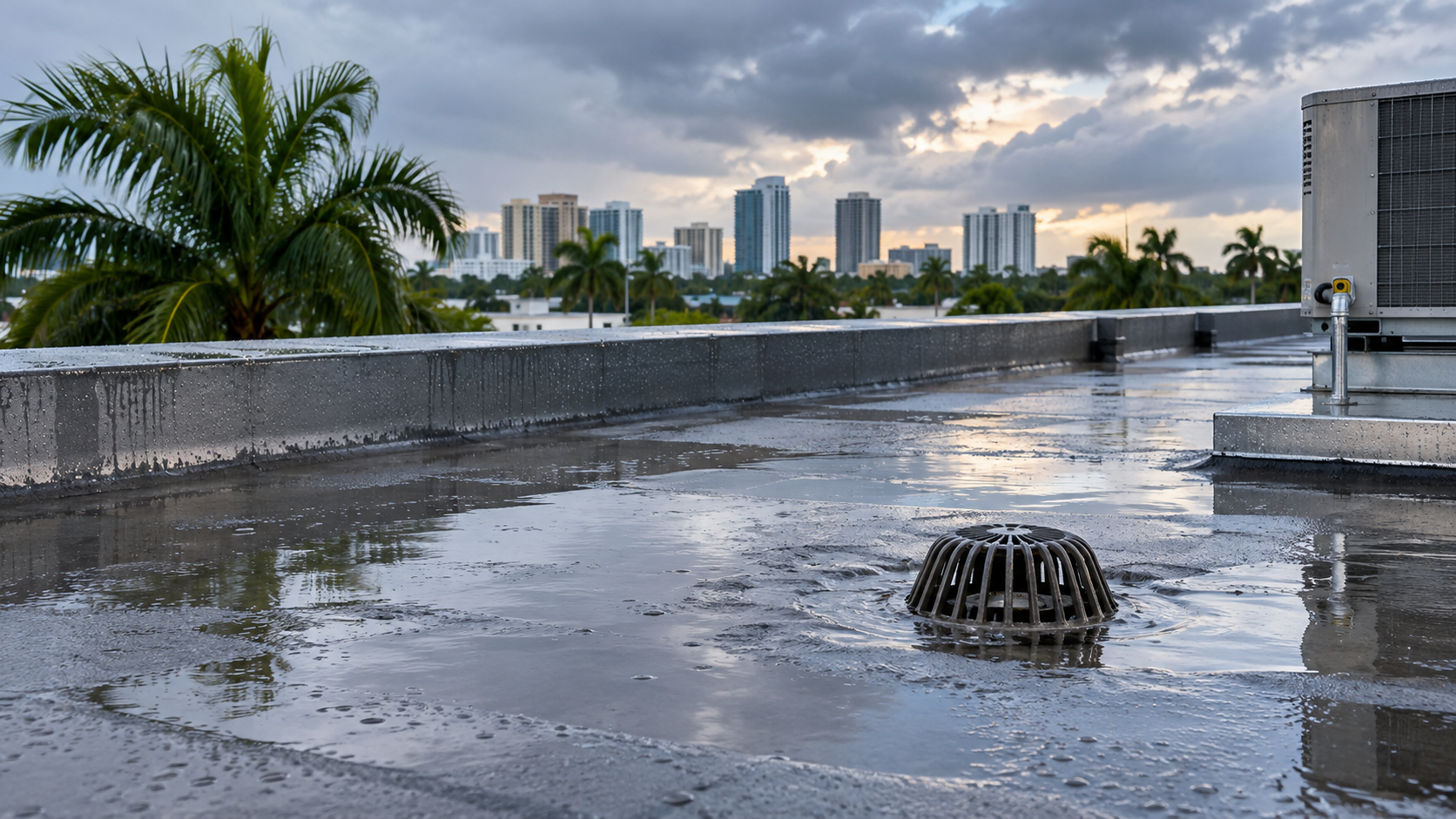
When drains become clogged with leaves, dirt, and debris, water can begin accumulating on the roof. This condition, commonly known as ponding water, places additional stress on the roofing system and can increase the risk of leaks and deterioration.
During the recent November storms, South Florida experienced rainfall intense enough to overwhelm drainage infrastructure in several communities. The same type of sustained rainfall can challenge commercial roof drainage systems, particularly when maintenance has been neglected.
Property managers and building owners should pay close attention to:
- Standing water that remains after rainfall has ended.
- Blocked roof drains, gutters, and scuppers.
- Deteriorating flashing around rooftop equipment and penetrations.
- Cracks, punctures, or separation in roofing membranes.
- Interior ceiling stains, moisture, or unexplained leaks.
Identifying these conditions early can help prevent larger repairs and unexpected disruptions to building operations.
A Roof Leak Doesn’t Always Appear Where the Problem Begins
One of the most misleading aspects of roof leaks is that water doesn’t always enter directly above the location where it becomes visible.
Water can travel along structural components, insulation, and other concealed pathways before eventually appearing as a ceiling stain or dripping into an occupied space.
This is why simply patching the area above a visible stain may not address the actual source of water intrusion.
A professional roof inspection can help identify the underlying problem and determine the appropriate repair before additional damage occurs.
What Property Owners Should Do After Heavy Rain
Following significant rainfall, homeowners, business owners, and property managers should take the opportunity to assess their properties for possible signs of water intrusion.
Begin by checking interior ceilings, walls, and areas surrounding windows or rooftop penetrations for new moisture or discoloration. For commercial properties, maintenance personnel should also review available drainage and leak reports.
If you notice standing water, recurring leaks, or visible roofing damage, schedule an inspection with a qualified roofing professional.
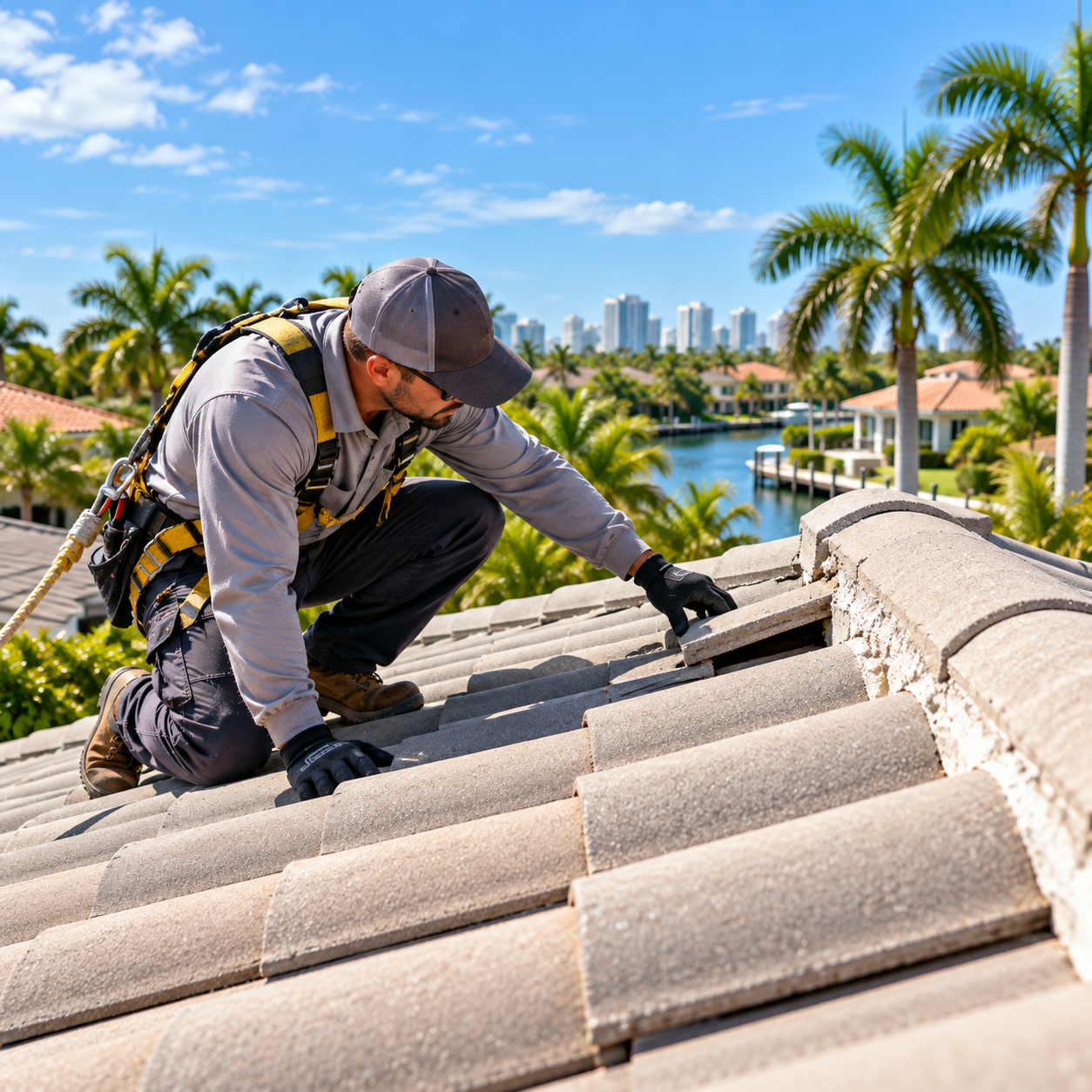
Avoid walking on wet roofs or attempting to inspect potentially damaged areas yourself. Roof surfaces can be slippery, and areas affected by water accumulation may present additional safety concerns.
The best time to address a roofing issue is before the next storm puts your property to the test.
Preparing Your Roof for the Rest of the Season
Although South Florida is entering its traditionally drier months, the recent flooding demonstrates why preventative roof maintenance should remain a year-round priority.
The coming weeks can provide an opportunity to address damage, schedule inspections, and plan roofing improvements before the next period of severe weather.
For commercial property managers, this is also an ideal time to review maintenance budgets, evaluate aging roofing systems, and begin planning necessary repairs or replacements.
A proactive approach can help extend the life of a roofing system, reduce unexpected expenses, and protect the people and property beneath it.
Protect Your Property With Pioneer Roofing
For 50 years, Pioneer Roofing has helped South Florida homeowners, businesses, and property managers protect their properties with dependable roofing solutions.
From roof inspections and leak detection to repairs, preventative maintenance, waterproofing, and complete reroofing projects, our experienced team understands the challenges South Florida weather can present.
The November storms are an important reminder that even during the dry season, your roof needs to be ready for whatever comes next.
Don’t wait for the next heavy downpour to discover a roofing problem.
Contact Pioneer Roofing today to schedule a roof inspection or discuss your property’s roofing needs.
Pioneer Roofing — Your Friends in High Places.
Serving Miami-Dade, Broward, and Palm Beach Counties.
Call: 954-284-1190
Website: www.pioneerroofingcompany.com