How to Tell the Difference — and Make the Right Call for Your Home
That suspicious water stain on your ceiling. The shingle you spotted in the yard after last week’s storm. The energy bill that seems higher than it should be. These little signs are your roof trying to tell you something — but the million-dollar question is: how serious is it?
For most homeowners, it’s genuinely hard to know whether a few repairs will do the job or whether it’s time to invest in a full replacement. Get it wrong one way and you’re pouring money into a roof that’s already on its way out. Get it wrong the other way and you’ve replaced a roof that had years of life left.
This guide walks you through how to think about that decision — clearly, honestly, and without the jargon.
First: What’s the Difference Between a Repair and a Replacement?
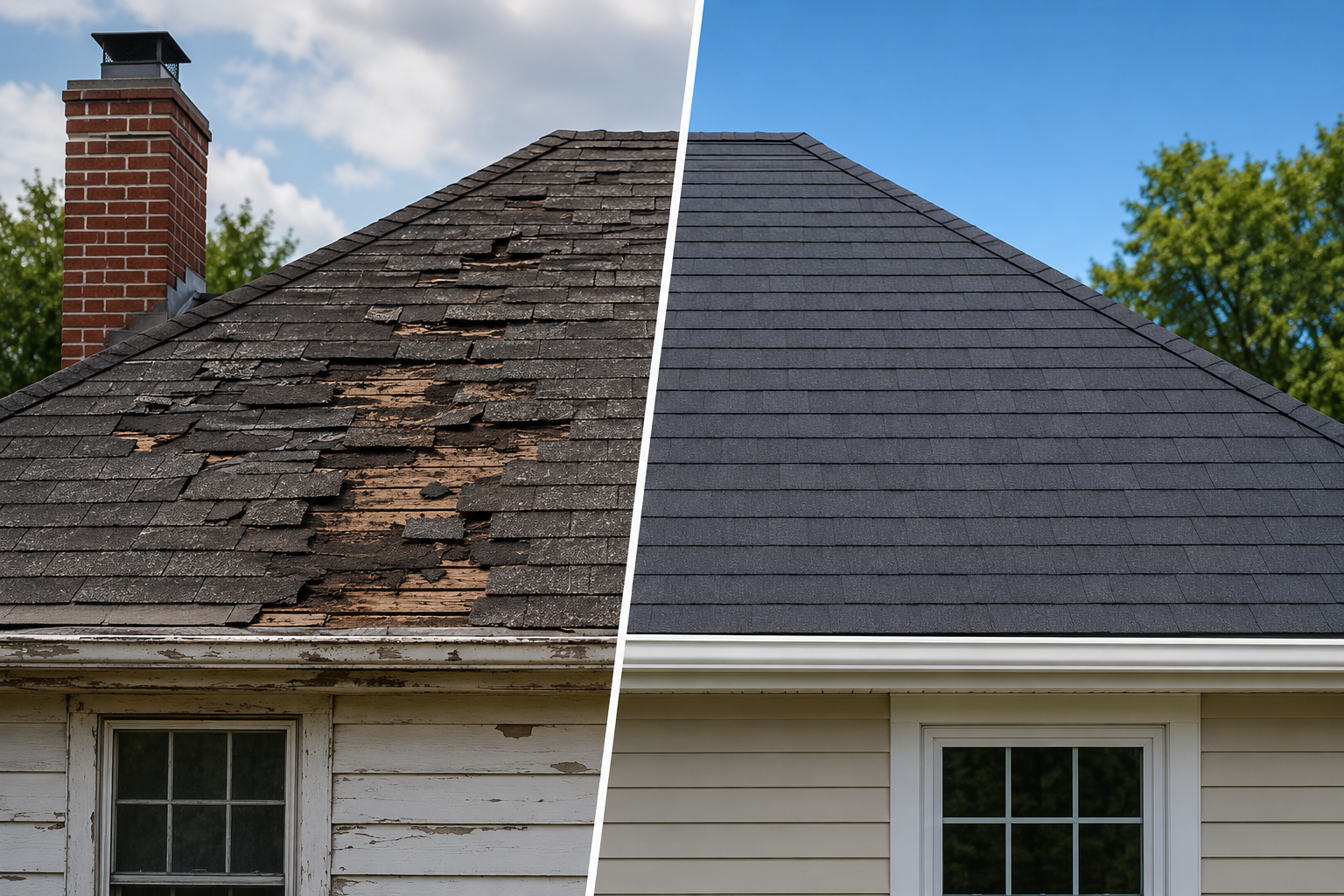
A roof repair addresses a specific, isolated problem — a few damaged shingles, a small leak around a flashing, a minor section that took storm damage. Repairs are targeted and relatively quick.
A full replacement means stripping the roof down and installing a new one from scratch. It’s a bigger investment, but it also resets the clock on your roof’s lifespan and often comes with a manufacturer’s warranty.
Knowing which one you actually need comes down to five key factors.
The 5 Factors That Determine Repair vs. Replacement
- Age of Your Roof
This is the single most important factor. Different roofing materials have different life expectancies:
- Asphalt shingles (3-tab): 15–20 years
- Architectural/dimensional shingles: 25–30 years
- Metal roofing: 40–70 years
- Tile (clay or concrete): 50+ years
If your asphalt shingle roof is 18 years old and you’re dealing with a leak, a repair might buy you a couple more years — but you’re likely looking at replacement within the next few years anyway. In that case, it often makes more financial sense to replace now rather than pay for repairs on a roof that’s already nearing the end of its life.
Rule of thumb: If your roof is within 5 years of its expected lifespan, strongly consider replacement over repair — even for issues that seem minor.
- How Much of the Roof Is Affected
A single area of damage is almost always repairable. The question is how widespread the problem is.
- Repair is usually the right call. Less than 30% affected:
- It depends on age and the rest of the roof’s condition — get a professional assessment. 30%–50% affected:
- Replacement is almost certainly the more cost-effective path. More than 50% affected:
One thing homeowners often don’t realize: roofing materials degrade at different rates depending on sun exposure, ventilation, and installation quality. A roof that looks fine in one area may be significantly weaker in another. A thorough inspection will catch what you can’t see from the driveway.
- The Nature and Location of the Damage
Not all damage is created equal. Some types of damage are almost always repairable:
- A few cracked, curling, or missing shingles
- Minor flashing failure around a chimney or vent
- Small punctures from fallen branches
Other types of damage are red flags that point toward replacement:
- Granule loss across large sections of the roof (check your gutters — granules look like coarse sand)
- Widespread curling, buckling, or blistering shingles
- Sagging or soft spots in the roof deck (the structure underneath the shingles)
- Multiple leaks in different areas of the roof
- Daylight visible through the attic
Structural damage — like a sagging roof deck — is almost always a sign that replacement is necessary. This isn’t something to patch over.
- History of Repairs
If you’ve had the same roof repaired two or three times in the past few years, that’s a pattern worth paying attention to. A roof that keeps developing new problems isn’t just costing you money in repairs — it’s also creating risk. Repeated patching can also make a replacement more complicated and expensive down the road if underlying issues go unaddressed.
One or two repairs over a roof’s lifetime is normal. A roof that needs attention every season is telling you something more significant.
- Your Plans for the Home
If you’re planning to sell the home in the next one to two years, a new roof can be a meaningful selling point — buyers and home inspectors take roofing condition seriously. On the other hand, if you’ve just moved in and the roof has 10–15 years of life left, repairs make much more sense than an unnecessary replacement.
Your timeline matters. There’s no universal right answer — only the right answer for your situation.
Signs You Probably Just Need a Repair
- Isolated damage from a recent storm or falling branch
- One or two areas of missing or cracked shingles
- A single leak source that can be traced to a specific area
- Roof is less than halfway through its expected lifespan
- No widespread granule loss or structural concerns
Signs You’re Probably Looking at a Replacement
- Roof is at or near the end of its expected lifespan
- Multiple leaks in different areas
- Widespread granule loss, curling, or buckling shingles
- Sagging or soft spots in the roof
- Significant damage covering 30% or more of the surface
- You’ve repaired the same roof multiple times in recent years
One More Thing: Don’t Skip the Professional Inspection
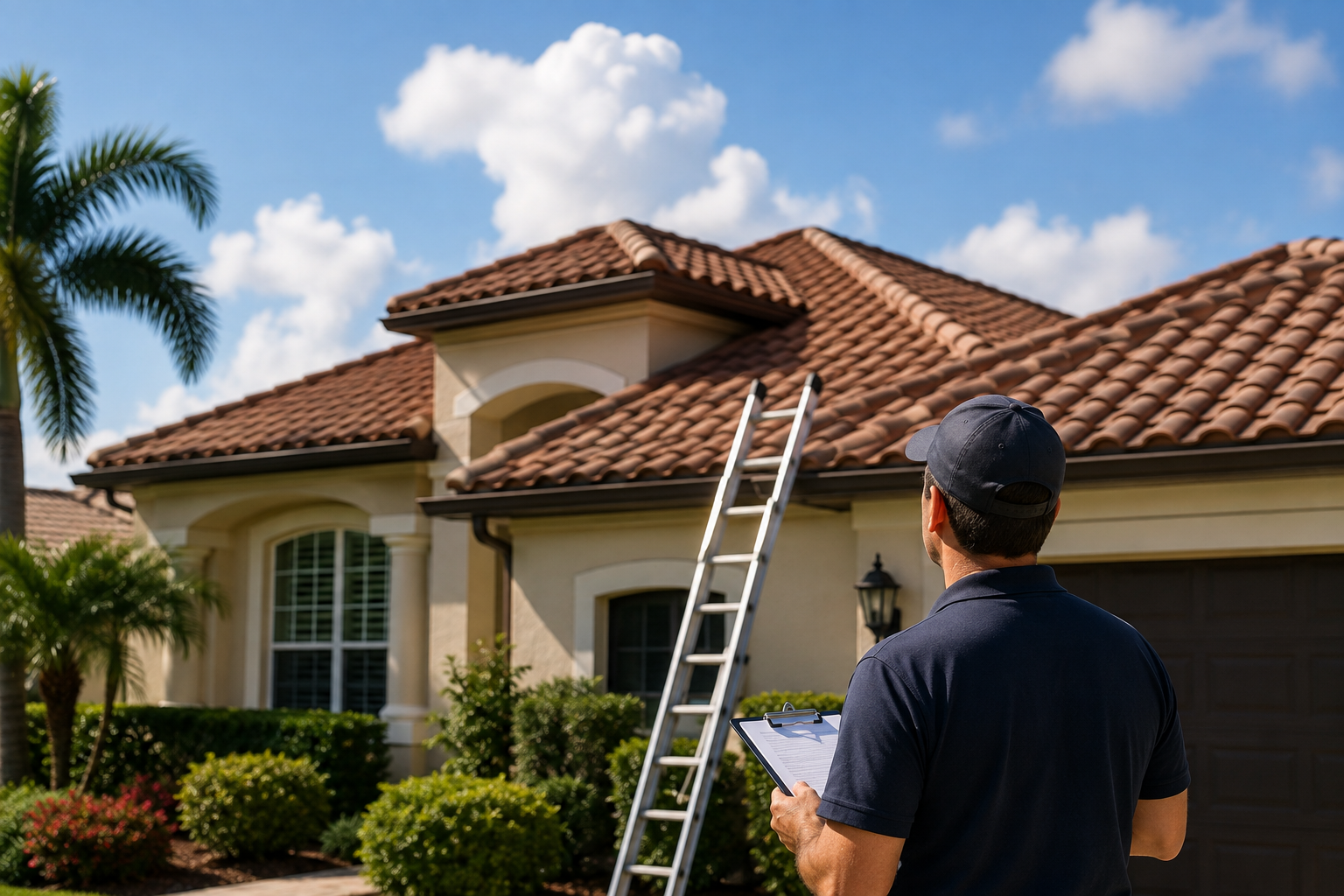
We’ve covered the general framework, but here’s the honest truth: the most accurate assessment of your roof’s condition comes from a professional who can get up there and look at it properly — not just from the ground.
A good inspection goes beyond what’s visible. A qualified roofer will check:
- The condition of the flashing around chimneys, skylights, and vents
- The state of the roof deck and underlying structure
- Ventilation and insulation in the attic
- Signs of moisture damage or mold that aren’t visible from the exterior
At Pioneer Roofing, we offer free, no-obligation inspections — and we’ll always give you an honest assessment of what your roof actually needs, not what costs the most. If a repair will do the job, we’ll tell you that. If you need a replacement, we’ll explain exactly why and walk you through your options.
Ready to Find Out Where Your Roof Stands?
Don’t wait for a small problem to become a major one. Schedule a free roof inspection with Pioneer Roofing today — we’ll give you a clear, honest picture of your roof’s condition and exactly what you need to protect your home.